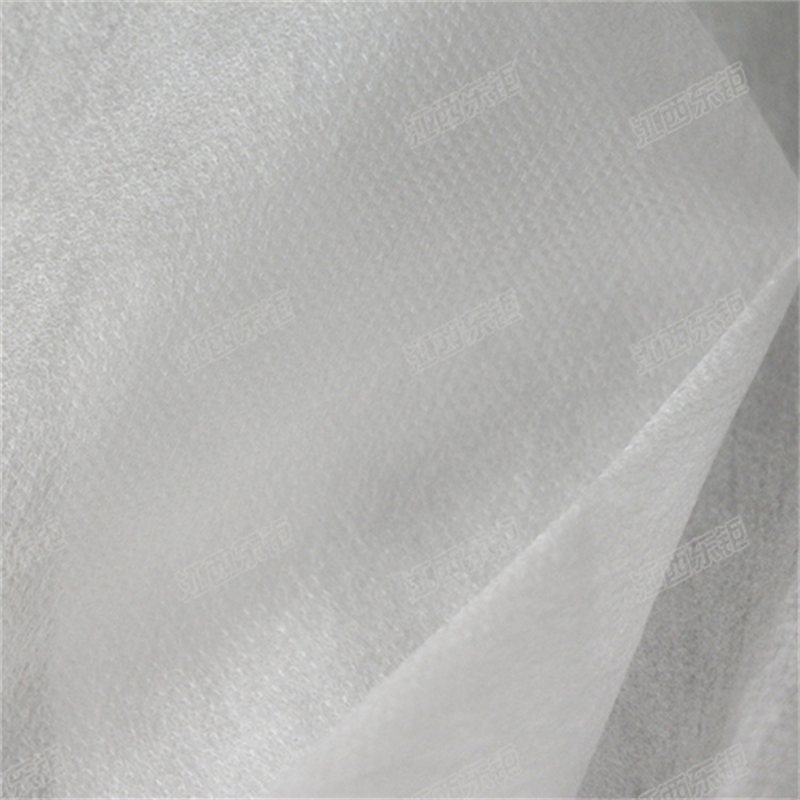
Product
ES hot rolled nonwoven fabric, bonded for a soft hand
ES hot rolled fabric is thermal bonded through a heated calendar, which gives a smooth surface, a soft hand and good tensile for its weight. It is the grade converters reach for when the finished product is handled by the end user rather than hidden inside it.
At a glance
Specification at a glance
| Parameter | Range offered for quotation | Confirm at enquiry |
|---|---|---|
| Fibre | ES bicomponent, PE sheath over PET core | Fibre source and dtex |
| Basis weight | 30 to 90 gsm working range | Target gsm and tolerance |
| Bonding | Hot rolled, embossed calendar | Pattern and bond area |
| Width | Slit to working width | Slit plan and core diameter |
| Surface | Plain, dot, fine mesh | Pattern depth you need |
| Strength | Quoted per grade, MD and CD | Acceptance test and value |
| Packing | Roll, shrink wrapped | Pallet and container plan |
Hot rolled versus through-air bonded
Hot rolling presses the web between a heated steel roll and an embossed roll. The bond points are dense and the surface is closed, so the fabric looks smooth, prints well and does not fuzz. Through-air bonding passes hot air through the web instead: it gives a bulkier, more open fabric with a softer, loftier hand but a rougher surface.
If the end product is printed, laminated or needs a clean edge, hot rolled usually wins. If it needs bulk and loft, through-air wins. We quote the one your application asks for, and we say so when the two are close.
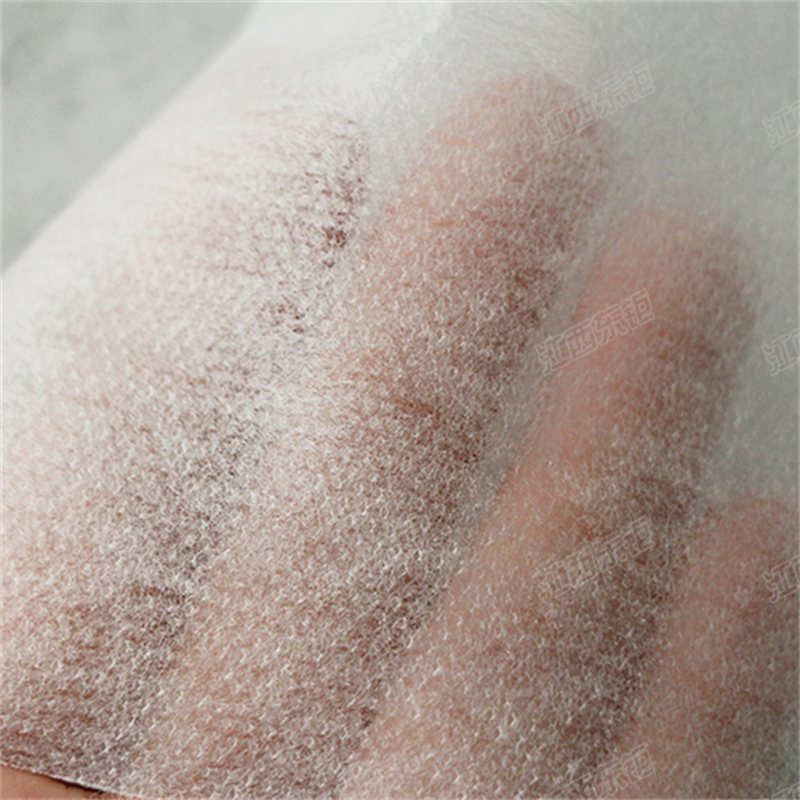
What the pattern does to the fabric
The embossed pattern is not decoration. Bond area controls strength, stiffness, opacity and how the fabric drapes. A fine dot pattern gives a soft, opaque fabric; a coarser pattern gives more strength per gram and a more visible texture. Pattern depth also changes how the fabric behaves in a heat seal, because the seal has to close through the texture.
Typical uses
Medical drapes and gown components, hygiene topsheet, protective covers, filtration pre-filter, packaging interleaving and sound insulation layers. In each case the grade is set by the acceptance test the buyer runs, so send the test method as well as the number.
Grades in this range
The weights below are the ones quoted most often. Each has its own test values and its own failure modes, so the grade is chosen against the converting line and the end use, not against the price per tonne.
- 40 gsm ES hot rolled - 40 gsm ES is a PE sheath, PP core bicomponent web bonded by heat alone. No binder, no late.
- 60 gsm ES hot rolled - 60 gsm ES keeps the soft hand of the lighter grade and adds enough tensile to run through .
- 80 gsm ES hot rolled - 80 gsm ES is the heavy end of the soft range: padding, liners and medical soft goods where.
Tell us the application and the acceptance test
The reply names a grade we can run, the tolerance we can hold and a lead time, or says plainly that we cannot make it.
Questions
Common questions
Is ES hot rolled fabric the same as spunbond?
No. Spunbond forms the web from continuous filaments directly after extrusion; ES hot rolled forms a carded staple web and then bonds it through a calendar. The visual difference is the surface: spunbond shows filament texture, hot rolled shows a pressed pattern.
Can you emboss our own pattern?
A new embossing roll is a tooling item with a lead time and a cost that depends on pattern size. If your volume does not justify a dedicated roll, we quote the closest pattern in our standard set and say what will differ.
What is the usual trial quantity?
Usually one pallet or a small roll set, enough to run your line for a shift. The trial is priced as a trial, not as a discounted production order, and the results are recorded against the batch.