Company
A nonwoven mill in Weifang, built around export orders
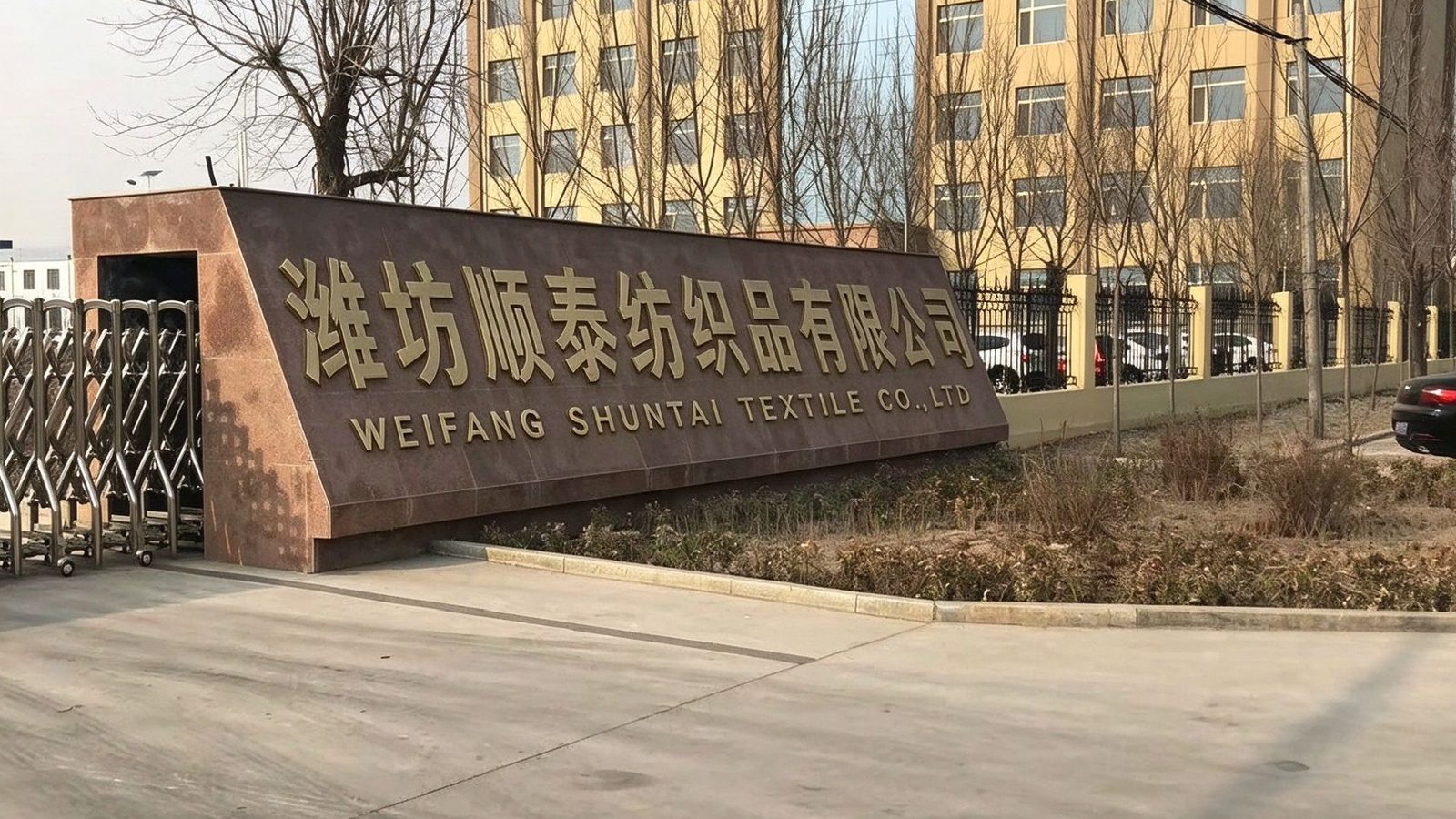
Weifang Shuntai Textile is a manufacturer and exporter of nonwoven roll goods in Shandong, China. Seven lines, 70 tonnes a day, 18,000 tonnes a year, and a business that is almost entirely made of repeat orders from converters, brand owners and importers.
At a glance
Specification at a glance
| At a glance | Detail |
|---|---|
| Company | Weifang Shuntai Textile Co., Ltd |
| Location | Weifang, Shandong, China |
| Capacity | 7 lines, 70 t per day, over 18,000 t per year |
| Processes | Spunlace, spunbond, ES hot rolled, bicomponent |
| Fibres | Polyester, viscose, ES, wood fibre, bamboo |
| Web formation | Parallel laid and cross laid, 30 to 90 gsm |
| Surface | Plain, dot, mesh and embossed patterns |
| Colour | White, black or matched to a sample |
| Business model | OEM and ODM supply, plus own export |
| Port | Qingdao, FOB, CIF and CFR on request |
What the mill actually makes
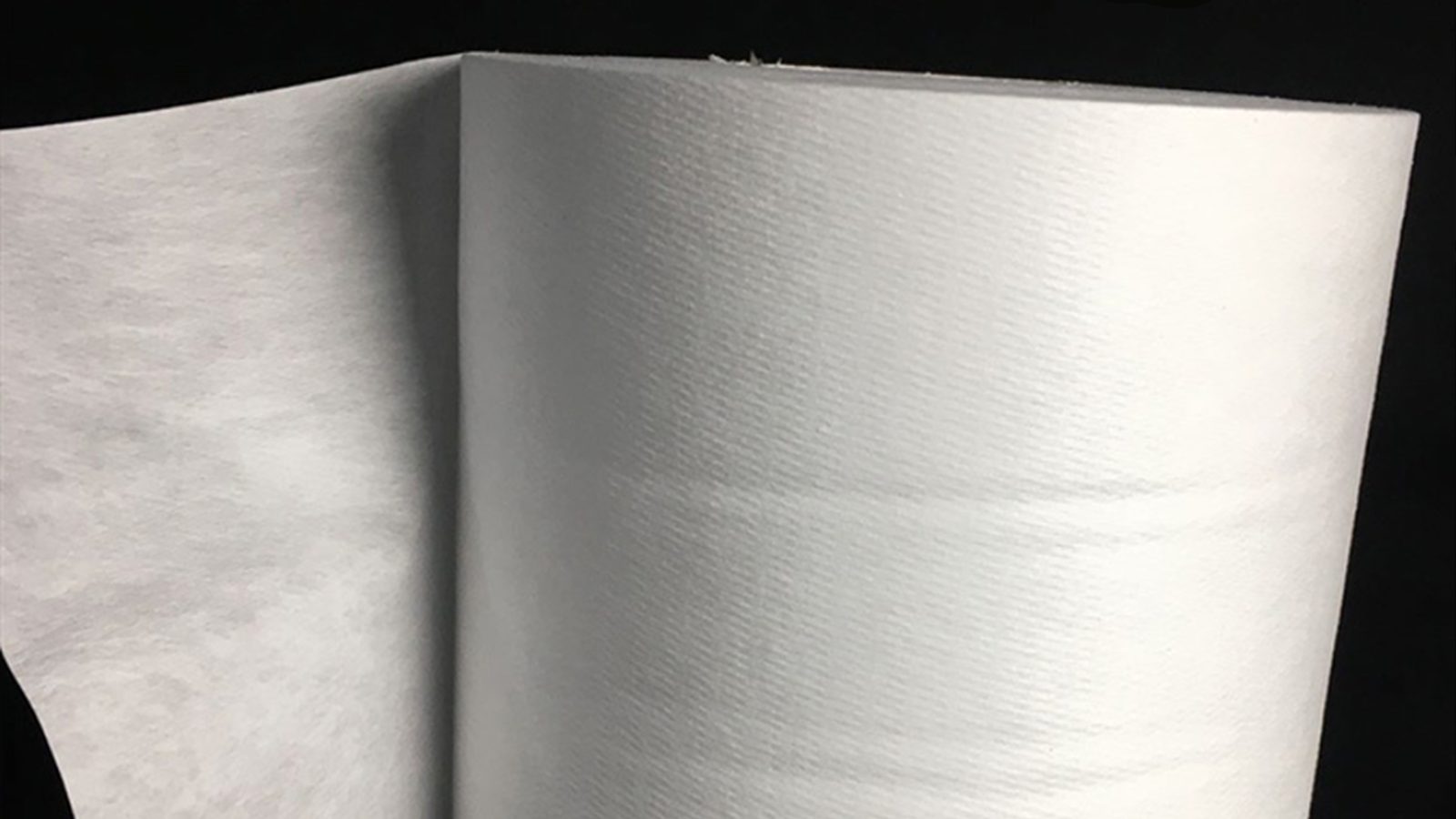
Roll goods, in four process families: spunlace, spunbond, ES hot rolled and bicomponent. Fibres are polyester, viscose, ES and plant fibres such as wood pulp and bamboo, formed parallel laid or cross laid between 30 and 90 gsm, with plain, dot, mesh or embossed surfaces. Colour and specification are made to order.
The end uses are the ordinary ones in this industry: medical and protective products, packaging, personal care and wipes, industrial and filtration components, agricultural covers and sound insulation layers. Each one is quoted against the specification the buyer runs, not against a catalogue.
Who we sell to
Converters who buy fabric and run it on their own machines. Brand owners who need finished wipes, pads or covers under their own label. Importers and distributors who hold stock for a region. Public tender suppliers who need the document pack to survive a customs check.
Marketing words do not survive these buyers. The first exchange is usually a gsm, a width, a roll diameter and a test method, and the answer has to be a grade that can run next month.
How the OEM and ODM side works
OEM is our fabric under your label. ODM is the whole article: fabric, slitting, folding, packing and printing, produced to your artwork with the sample signed off before the run. For wipes this happens in a GMP workshop with microbiological testing per batch.
Either way, the sample comes first. A trial roll proves runnability, then the running order is released with the same settings recorded against the batch.
Where the goods go
More than 30 countries, weighted towards Southeast Asia, Europe and the Middle East, with regular shipments to North America and Africa. Qingdao is the usual port of loading, FOB, with CIF and CFR quoted when the buyer has no forwarder of their own.
What we do not claim
We do not present a certificate as if it covered every grade we make. A management system certificate has a scope; a test report covers the sample tested on the day; an MSDS describes a material, not a quality level. Send the destination and the application and you will get the documents that apply to that order, named one by one.
We also do not publish capacity figures we cannot schedule. If a programme needs four containers a month, the honest answer depends on the month and the grade, and that is what you will get.
Tell us the application and the acceptance test
The reply names a grade we can run, the tolerance we can hold and a lead time, or says plainly that we cannot make it.
Questions
Common questions
How long has the company been making nonwoven fabric?
Shuntai has been producing and exporting nonwoven roll goods for years, with the current plant running seven lines. The years that matter for your order are the years on the grade you need, and we will say plainly if a grade is new to us.
Are you a trading company or a factory?
A factory that exports directly. Spunlace and spunbond are made in house; where a composite or a speciality is bought in, we say so instead of presenting it as our own production.
Can we visit the plant?
Yes. Tell us the dates and the lines you want to see, and we will arrange it around the production schedule so you see the grade you are buying, not an empty hall.
Which documents come with a shipment?
Packing list, invoice, certificate of origin, and a batch COA. REACH, RoHS, MSDS and test reports are issued when the destination or the application requires them.