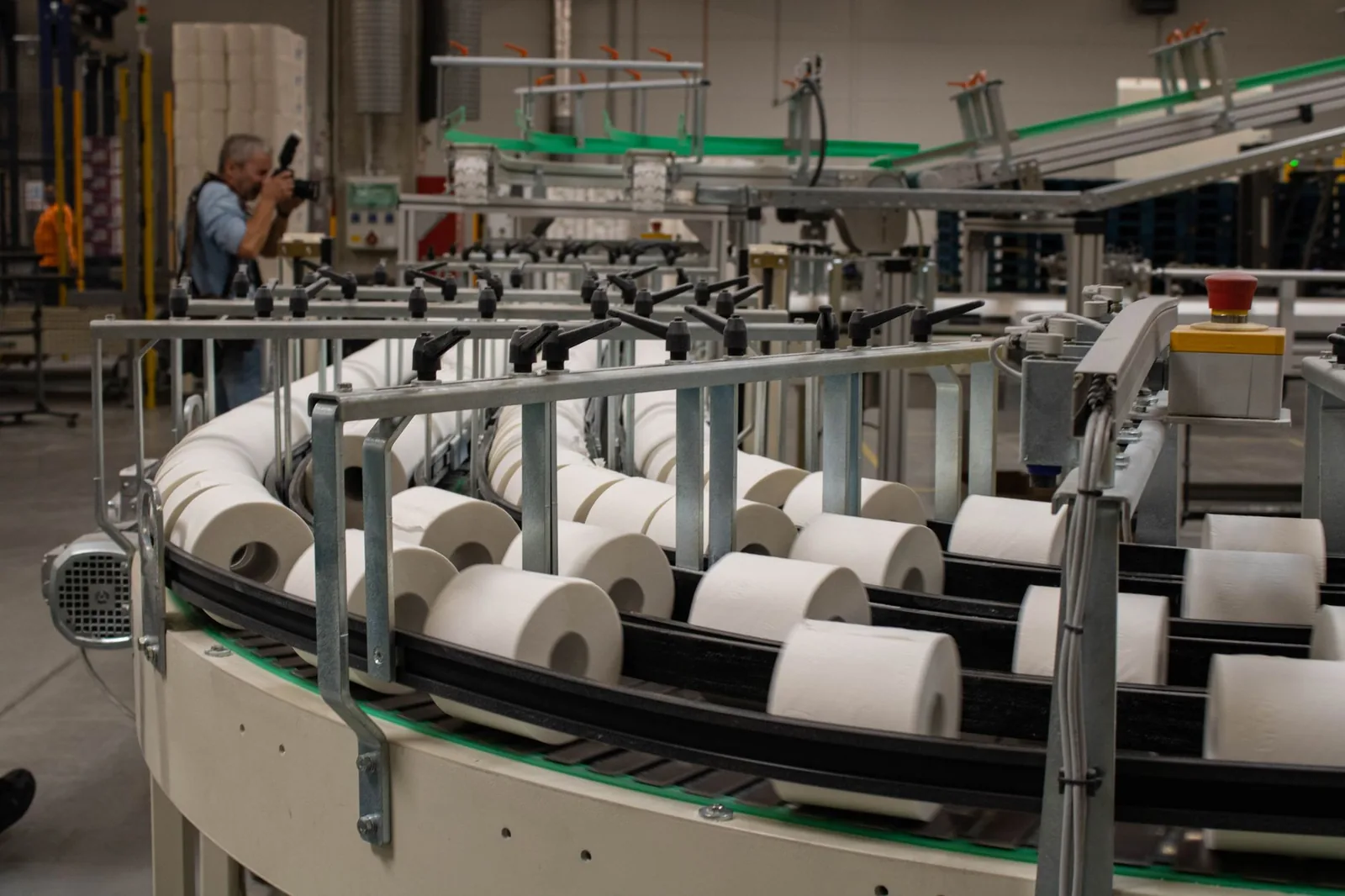
Supply process
OEM and ODM for wipes: the process behind a private label
Two different jobs hide under the same words. OEM means our fabric under your label. ODM means the whole article: fabric, fold, pack, print and carton, produced to your artwork. The difference decides who owns the specification.
At a glance
Specification at a glance
| Item | OEM | ODM |
|---|---|---|
| What is supplied | Fabric rolls to your spec | Finished wipes under your brand |
| Specification owner | Buyer | Shared, agreed at sample stage |
| Artwork and print | Not applicable | Buyer supplies artwork, we print |
| Minimum order | From one pallet of fabric | Typically one SKU per run |
| Sample approval | Roll sample | Finished sample with artwork |
| Documents | COA, packing list | Plus artwork proof and pack specification |
Where the risk sits
In OEM, the buyer owns the converting step, so fabric defects surface on the buyer's line and the conversation is about the roll. In ODM, the finished article carries the defect and the conversation is about the pack, which is harder to trace and more expensive to correct.
That is why ODM programmes are approved on a finished sample, not a fabric sample. The sample is signed, photographed and kept, and it becomes the reference for the whole run.
The sequence that avoids reprints
Fabric approved, artwork approved, dieline approved, sample made and approved, then production. Artwork approved after sampling is the usual cause of a reprint, because the print changes the fold and the fold changes the pack.
If the buyer has an existing pack, send it. Reverse engineering a pack is faster and cheaper than designing one from a description.
What to prepare before the first enquiry
The wipe size, the lotion and loading, the pack format, the count per pack, the artwork status, the target market and the annual volume. With those, a quote is a real number rather than a range.
The costs that surprise first time buyers
Print plates, dieline changes, film specification, carton artwork and the first run waste. On a first private label programme these can add a meaningful percentage to the first order and almost nothing to the third. Budget them separately rather than discovering them inside the unit price.
The second surprise is the sample: a full finished sample with artwork and lotion takes longer than the fabric sample, and the programme clock starts from its approval.
What to keep in the file
The approved sample, its photographs, the artwork proof, the lotion specification and the pack test results. When a complaint arrives a year later, that file is the difference between a conversation about standards and a conversation about opinions.
Tell us the application and the acceptance test
The reply names a grade we can run, the tolerance we can hold and a lead time, or says plainly that we cannot make it.
Questions
Common questions
Can we start with one SKU?
Yes, one SKU per run with the quantity agreed at quotation. Ramp up is scheduled against your forecast rather than assumed.
Who owns the artwork?
The buyer. We print it and keep a proof for the run. Files are not reused for other customers.
Do you handle import filing documents?
We prepare the documents the destination requires and share the list with the buyer. The filing itself is done by the importer of record.