Process comparison
Adhesive bonded vs spunlace: the honest comparison
Adhesive bonding is the cheaper route and it shows in the fabric: firmer hand, more lint, a chemical residue the buyer sometimes has to declare. Spunlace is the softer, cleaner route and it costs more. The choice is usually made by the end product, not the price list.
At a glance
Specification at a glance
| Property | Adhesive bonded | Spunlace |
|---|---|---|
| Bonding | Chemical binder applied and cured | Water jet entanglement, no binder |
| Hand feel | Firmer, paper-like | Soft, textile-like |
| Absorbency | Reduced by binder | High |
| Lint | Higher | Low |
| Strength | Can be high, direction depends on web | Moderate, tunable by lay |
| Residue | Binder present, must be declared | None added |
| Cost | Lower | Higher |
| Best for | Interlinings, wadding, industrial | Wipes, medical, personal care |
What the binder does, and what it costs you
A binder glues fibres at their crossing points. It is fast, cheap and works on almost any fibre mix, which is why adhesive bonded fabric dominates industrial wadding and interlining. The trade is feel and absorbency: binder fills the spaces that would otherwise hold water, and it stiffens the web.
For products with a residue or skin contact claim, the binder has to be declared. That declaration is a compliance task, not a marketing one, and it is decided before the order.
Why spunlace replaced it in wipes
Spunlace entangles fibres with water jets and adds nothing to the web. No binder means no residue, better absorbency and a softer hand, which is exactly what wipes, medical and personal care products need. The cost is in the water system: filtration, heating and recycling are expensive, and the line is slower than a binder line.
Where adhesive bonded still wins
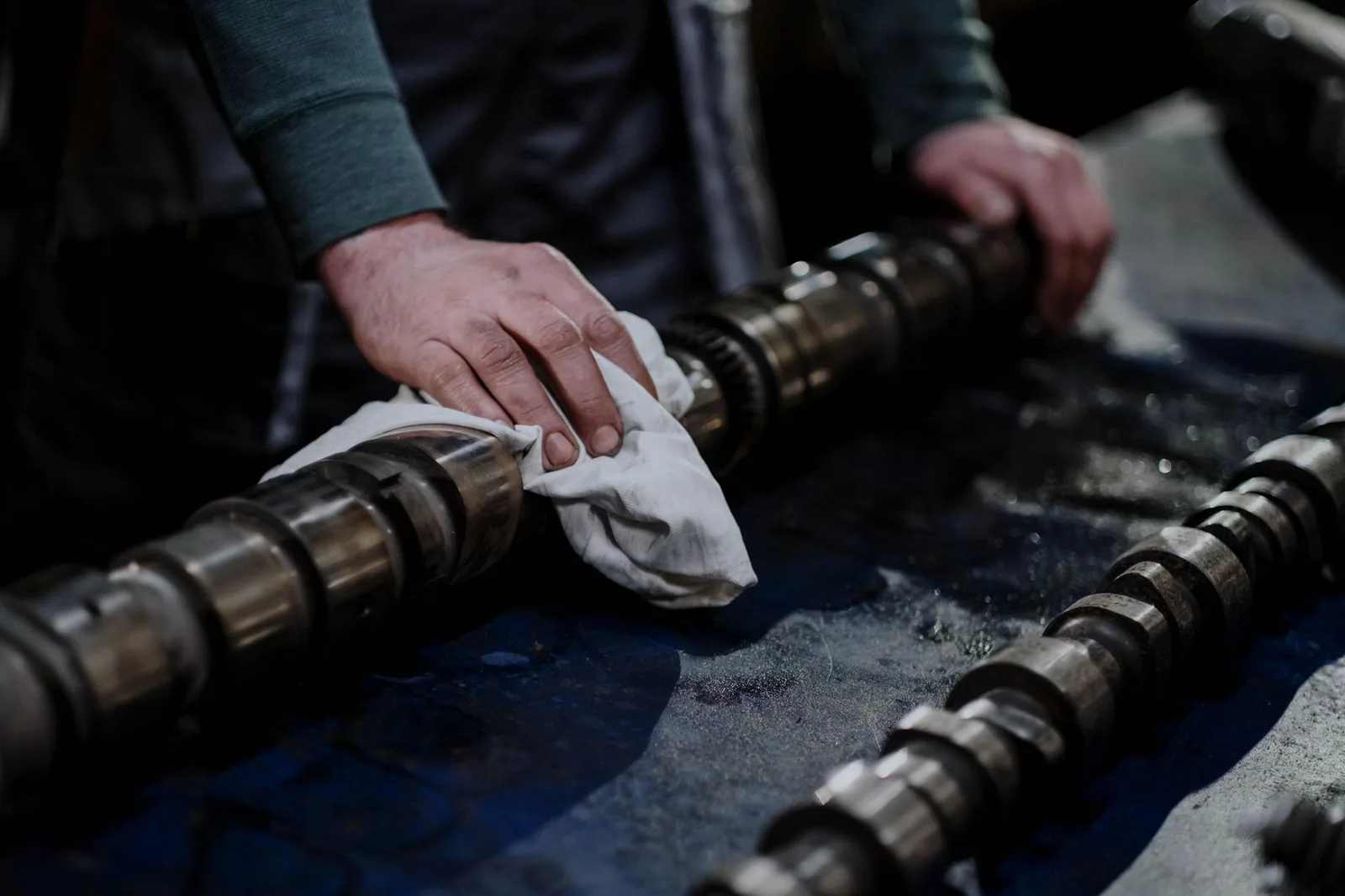
Where the product is hidden, structural or cost driven: furniture interlining, filtration support, automotive trim, agricultural backing, industrial wipes where absorbency is secondary. In those uses the binder is an advantage, because it gives stiffness and dimensional stability that spunlace does not offer cheaply.
What the binder chemistry changes in the supply chain
An adhesive bonded fabric carries a chemical that may need declaring for skin contact, food contact or recycling. That declaration is not optional in regulated markets, and it has to come from the binder supplier through the fabric producer. A buyer who asks for a formaldehyde free declaration after the order is asking for a new formulation, not a document.
Spunlace avoids the question by adding nothing, which is part of why it dominates wipes, medical and personal care despite the higher price.
When a hybrid makes sense
Some products want binder stiffness with better absorbency than a fully bonded web gives. Those grades use a lighter binder load, or a spunlace base with a binder applied on one face. They are not standard catalogue items, and they are quoted after a trial, but they solve a real problem for industrial wipes and filtration supports.
Tell us the application and the acceptance test
The reply names a grade we can run, the tolerance we can hold and a lead time, or says plainly that we cannot make it.
Questions
Common questions
Is adhesive bonded fabric food safe?
It can be, but the binder has to be declared and tested for the market. Ask for the declaration rather than assuming, because binder chemistry varies widely between producers.
Can spunlace match the strength of an adhesive bonded grade?
At the same weight usually not fully, and at a higher weight it can. The comparison only makes sense per square metre cost, not per kilogram.
Which is better for an industrial wipe?
Often adhesive bonded, because the wipe is used with solvent and thrown away. Spunlace is chosen when the wipe touches a surface that must not be left with lint.