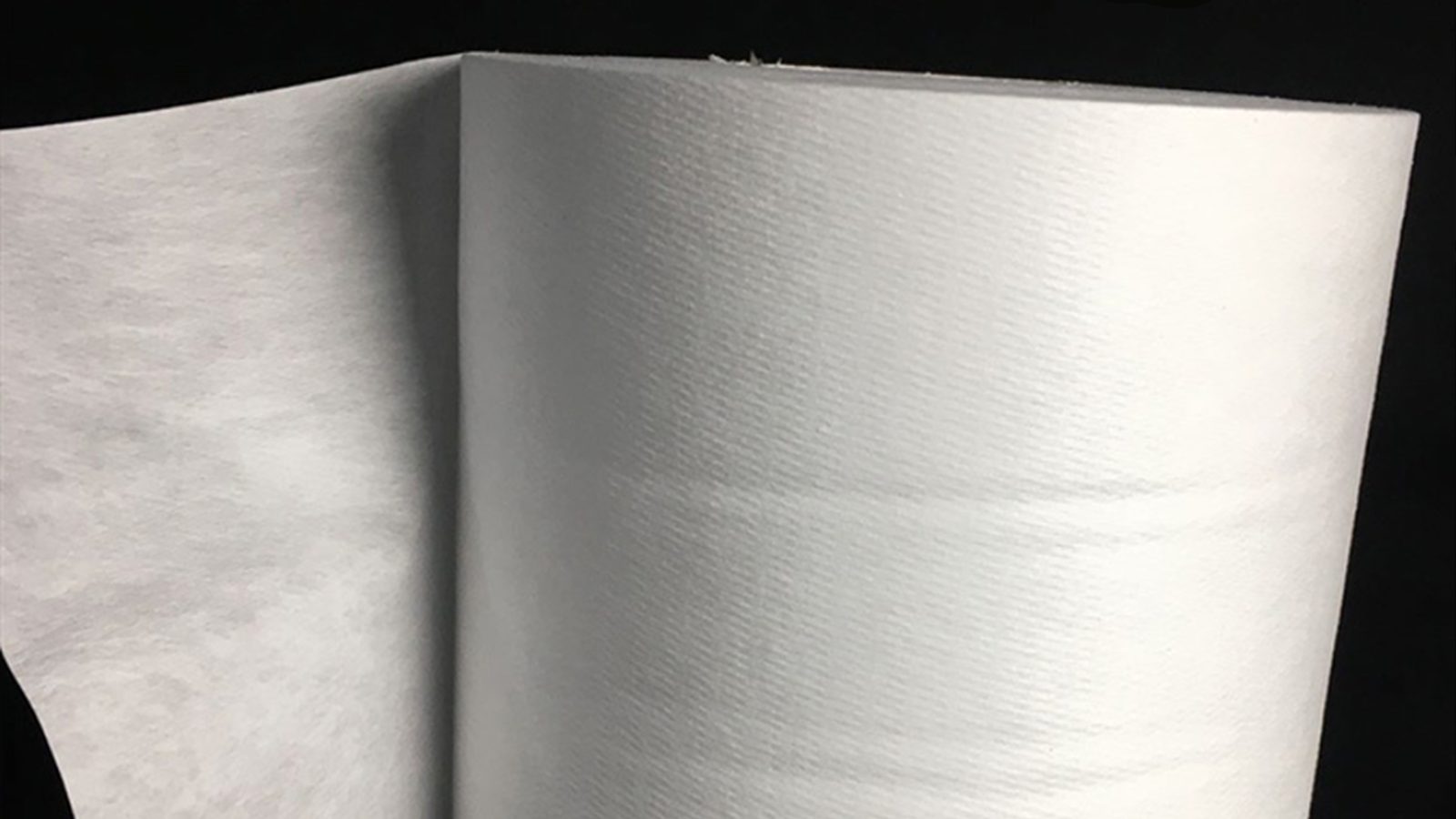
Supply and commercial
Why does roll build matter if the fabric is the same?
Because the line unwinds the roll, not the fabric. Core size, winding tension and length per roll set how often the line stops and how the web behaves at speed.
At a glance
Specification at a glance
| Parameter | Common range | Effect on the line |
|---|---|---|
| Core diameter | 76 mm or 152 mm | Mandrel compatibility |
| Roll diameter | up to 1,200 mm | Unwind stand capacity |
| Length per roll | 500 to 3,000 m | Changeover frequency |
| Winding tension | Grade dependent | Telescoping or blocking |
| Splice | Marked, taped | Line stop planning |
Telescoping and blocking
Too little tension and the roll telescopes on the unwind; too much and the layers block, especially on soft or coated webs. Both look like a fabric problem and are actually a winding problem.
Length per roll is a cost decision
Longer rolls mean fewer stops. They also mean heavier rolls, which need handling equipment and can exceed a pallet limit. The right number comes from the line, not from the catalogue.
Send the specification question with the numbers
Width, weight, roll build or a claim to resolve: tell us what the line sees and we answer with the tolerance and the next step.
Questions
Common questions
Are splices acceptable?
Usually yes if marked and limited in number. State the maximum per roll and how they are marked.
Which core size is standard?
76 mm for converting, 152 mm for heavy rolls. Match it to the mandrel.
Can rolls be wound to a fixed length?
Yes, length controlled winding is normal. State the tolerance, typically ±1 percent.